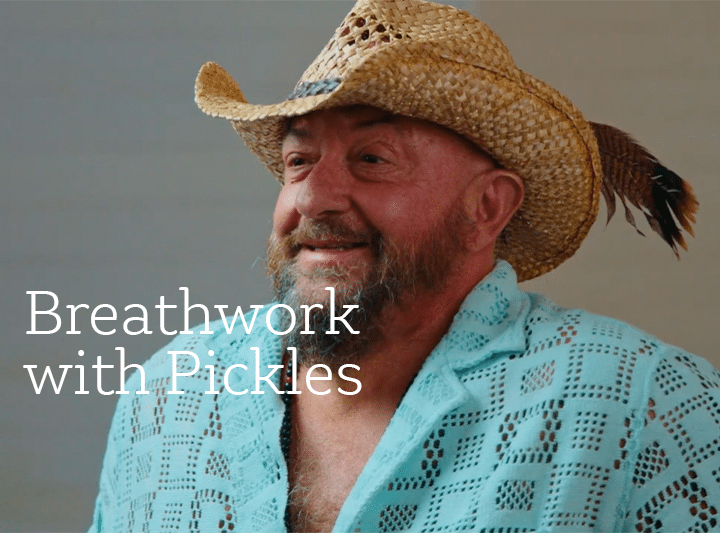
Scott “Pickles” Lawlor, E-RYT 500 and YACEP, is the owner of Kind Yoga and a longtime Outer Banks–based teacher who blends traditional vinyasa, yogic philosophy, precise alignment, and Sanskrit with humor and playfulness, earning a devoted following across the East Coast and online after completing his 220-hour training with Amalam School of Yoga, his 300-hour training with Alanna Kaivalya in New York City, and extensive continuing education through Integral Yoga and other respected teachers.
In this video, Scott “Pickles” explores many breathwork techniques that influence both the nervous system and brain function. he provides a breath for a sense of calm, stress relief, energy and joy.
The first set, broken into three parts (in bold), is Vijnana breath, which emphasizes relaxed, natural breathing to improve interoceptive awareness and stimulate the parasympathetic nervous system, supporting stress reduction and emotional regulation. Anulom Vilom, a gentle alternate-nostril breathing technique, has been shown to balance activity between the left and right hemispheres of the brain while lowering heart rate and blood pressure. Nadi Shodhana adds intentional pauses and specific breathing patterns that help balance the autonomic nervous system, make breathing more efficient, and set the right conditions for better focus and meditation.
The second set is called Ujjayi Pranayama, or “victorious breath,” which is a controlled breathing technique in which the glottis is gently constricted to create a slow, audible breath through the nose. This resistance increases vagal tone, helping regulate the autonomic nervous system while improving oxygen exchange and respiratory efficiency. The steady rhythm of Ujjayi also enhances focus, synchronizes breath with movement, and supports a calm yet alert mental state during yoga practice.
The third set is called Shitali and Sitkari Pranayama, which is a cooling breathwork practice designed to reduce excess heat in the body and calm the nervous system. By inhaling through the tongue in Shitali or through gently clenched teeth in Sitkari, the breath is cooled before entering the lungs, which can help lower body temperature, slow heart rate, and decrease sympathetic nervous system activity. These practices are commonly used to ease agitation, support emotional regulation, and restore balance during times of stress, heat, or overstimulation.
The last set is called Bhastrika Pranayama, often called bellows breath, and is a stimulating breathing practice characterized by rapid, forceful inhalations and exhalations driven by the diaphragm. This technique increases oxygen uptake, enhances carbon dioxide removal, and activates the sympathetic nervous system, leading to heightened alertness and energy. Bhastrika also generates internal heat, improves circulation, and is commonly used to clear mental fog and prepare the body and mind for more focused practices.